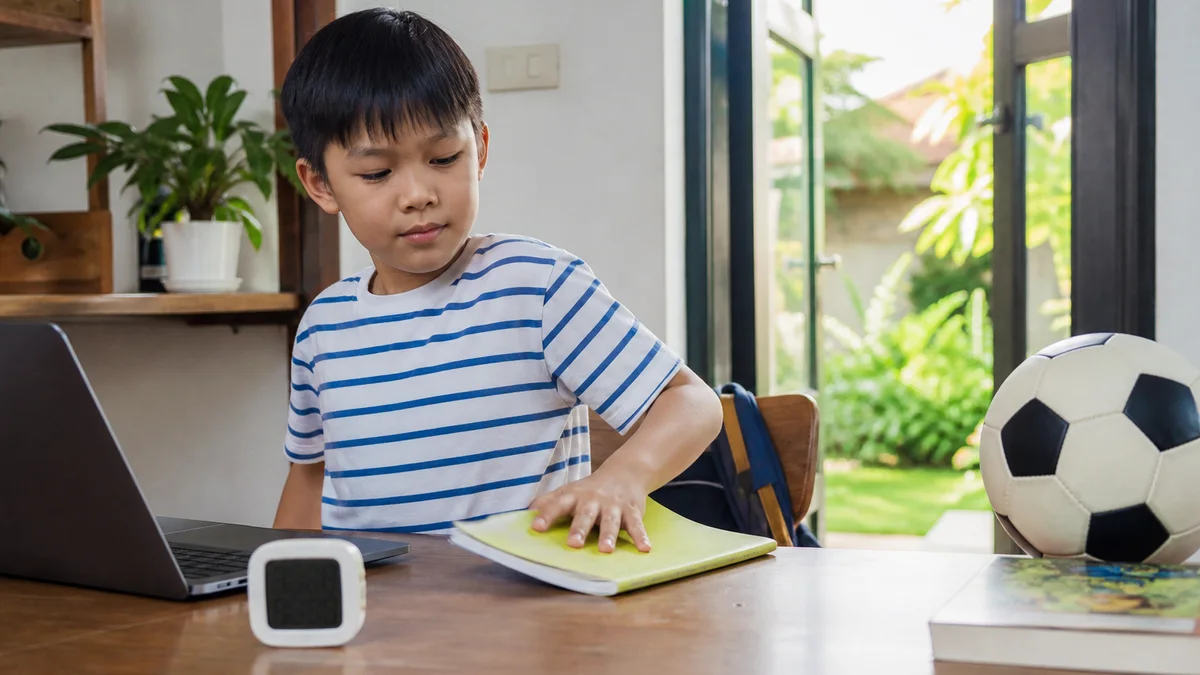
Parents often want a clear number: 20 minutes or an hour? But in the same 30 minutes, one child can actively create a program and chat with parents, while another child just clicks on the reward. Quality, context, and screen substitution are as important as minutes.
Practice milestones to start
- 5–6 years old: 10–15 minutes per session, 2–3 sessions per week; prioritize screen-free and short drag-and-drop activities.
- 7–9 years: 15–25 minutes each session, 3–4 sessions per week.
- 10–12 years: 25–40 minutes; Long projects can be divided into several stages.
This is an operating suggestion, not a medical recommendation. Adjust according to the child, the school schedule, and the doctor's advice if the family has specific concerns.
What do current recommendations say?
The American Academy of Pediatrics (AAP) updated its perspective to look beyond just counting hours and looking at the quality of interactions with digital media. For older children and teens, the AAP does not prescribe a single limit that applies to all; they advise considering quality, context and family conversations. Source: AAP Screen Time Guidelines, updated 2025.
For children 2–5 years old, traditional AAP guidelines recommend a maximum of about one hour of quality content per day and adult participation. For children as young as 6 years old, the family media plan should be individualized and ensure screens do not interfere with sleep or exercise. Source: Pediatrics — Healthy, Active Living.
Signs the lesson is taking too long
- Baby starts pulling randomly, no longer predictably.
- Baby gets irritable when stopping.
- Baby eye pain, body fatigue or loss of posture.
- The lesson often interferes with sleep, exercise or meal times.
- The child continues just for the reward points, no longer caring what he is creating.
Stop before exhaustion.End when the child has just finished A small step or a question you want to try next time is often better than forcing yourself to complete the entire course.
How to turn 20 minutes into a quality study session
Distinguish between creation and consumption
Active programming is not like watching a self-playing video, but it's still screen time. Look to see if your baby makes decisions, is creative, and interacts with others. AAP encourages families to create a media plan together, creating screen-free zones such as mealtimes and bedtime. Source: HealthyChildren — Digital World.
Short answer
Start with 10–25 minutes depending on age, observe concentrated quality and gradually increase to larger projects. A good lesson ends with something your child understands, not with the maximum number of minutes he can endure.
Try a short lesson with Karotto
Karotto breaks the lesson into small quizzes so your child can learn in a reasonable amount of time, without ads and without third-party tracking.
View Karotto on Apple App Store →