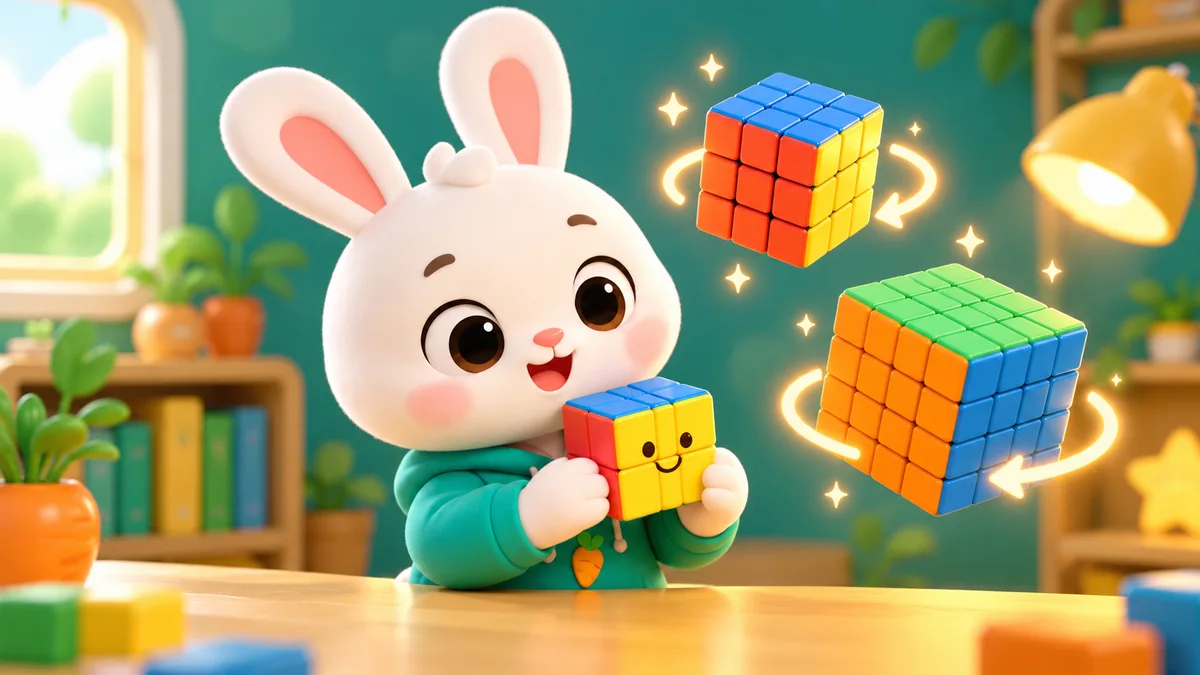
What do children learn in the Cube course?
The multicolored cube looks difficult, but the solution for beginners is actually a few short, repetitive rotations. Karotto teaches in three stages, each stage reuses what the child has learned in the previous stage:
What is the "spell"?
Each rotation sequence is named and divided into short rhythms for your baby to read aloud like a rhyme. For example, "Rabbit Rhythm" has 4 beats: right up, top left, right down, top right. The child learns the beat first, then learns when to use it, instead of having to remember the letter symbols.
What does a lesson look like?
The child always preview: the 3D block on the screen rotates each beat, with the beat name clearly visible. Then the child makes it himself on the block in the app, or follows it on the real block he is holding.
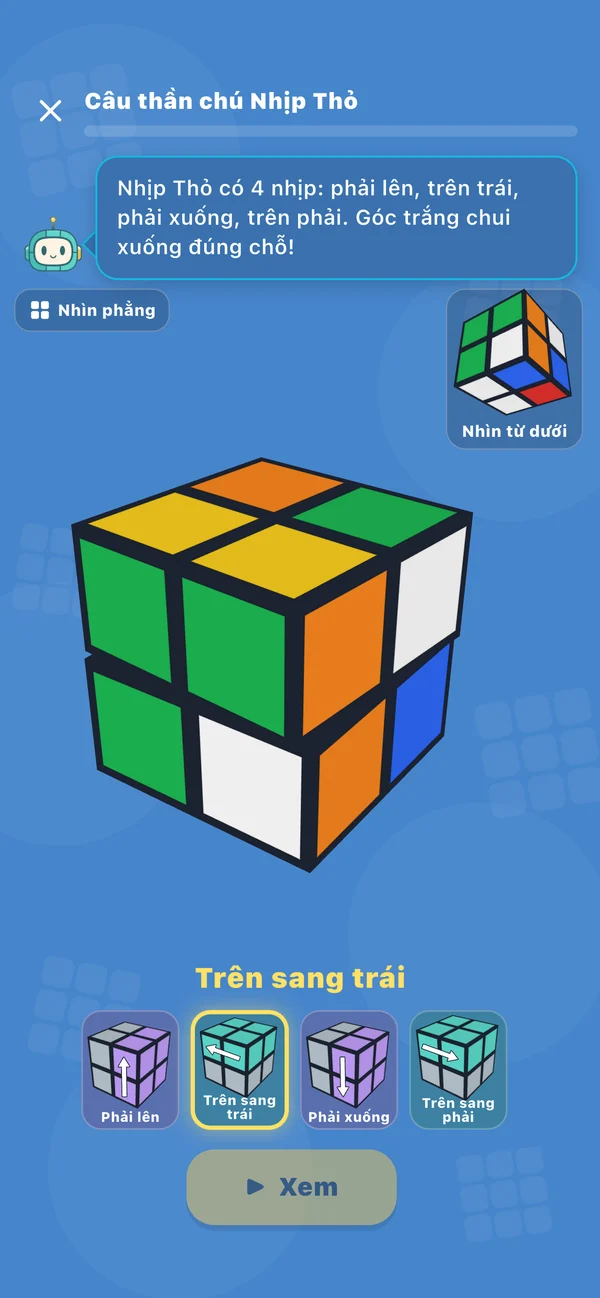
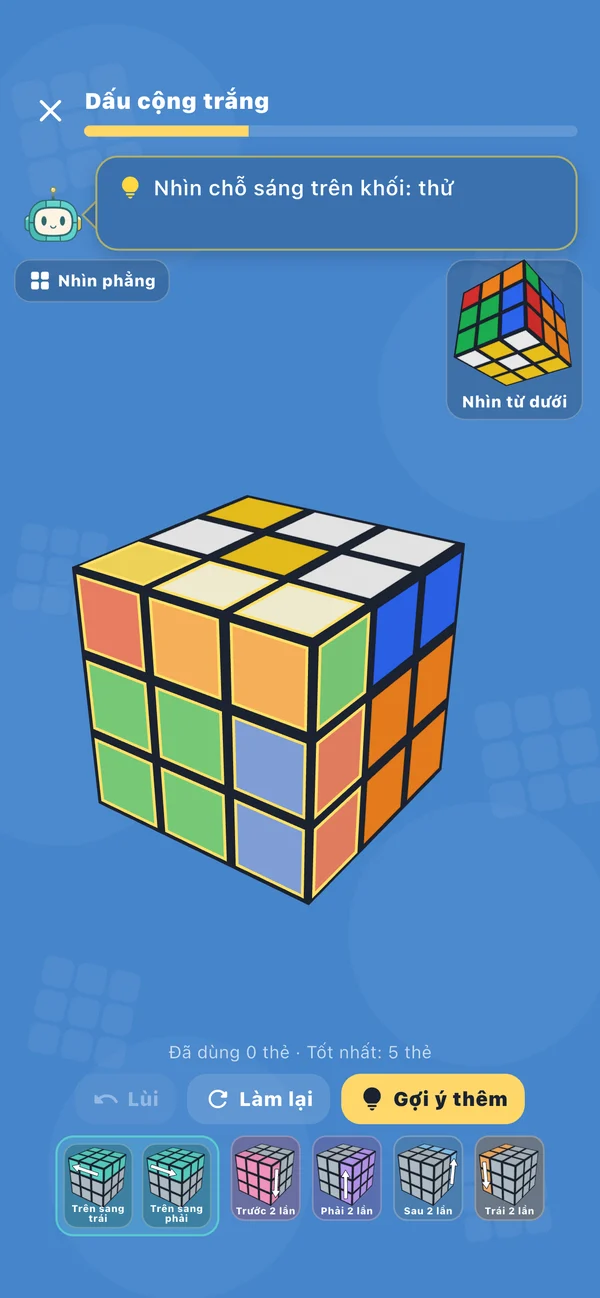
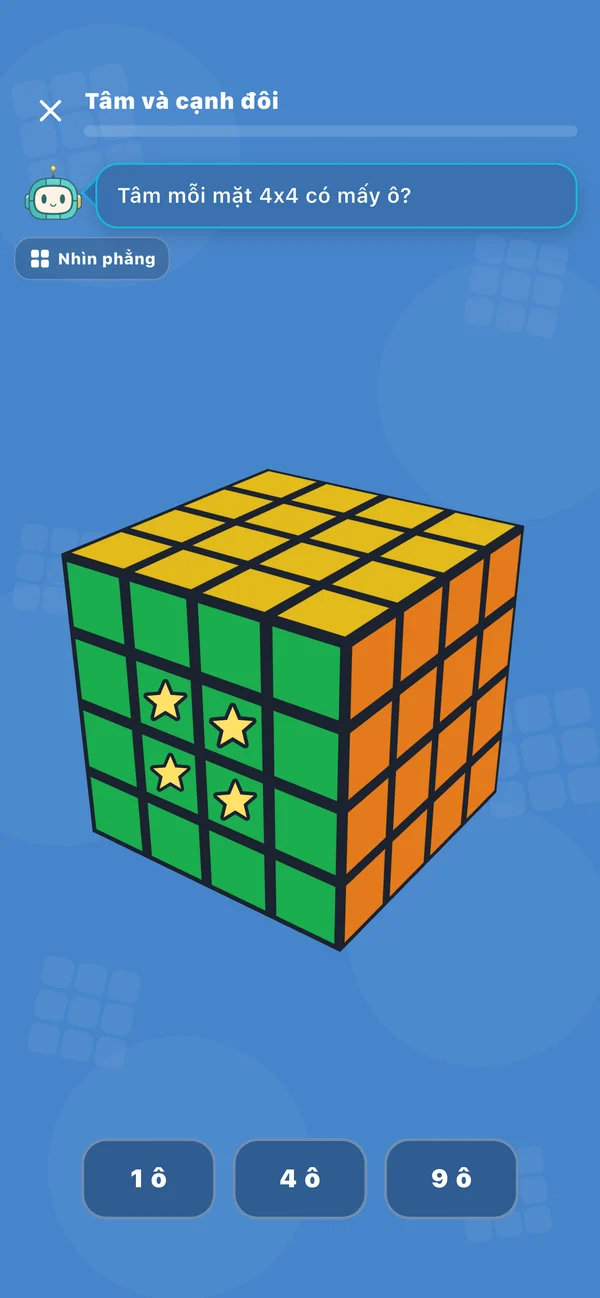
Solve your child's real block
Children can color their real block into the app, one side at a time. The app reads that state and shows how to solve each step according to the method and spell the child has learned, so the solution is not a strange sequence but a rhythm the child is familiar with.
Why can the child learn on his own?
- Voice reads out loud: The robot's instructions and prompts are read aloud, available in Vietnamese and 12 languages. other languages.
- Preview and then do: Each spell has a sample animation, children can watch it as many times as they like.
- The robot suggests 3 steps: level 1 lights up the face to be rotated, level 2 shows the rotation direction arrow, level 3 brightens Spell card to use.
- Small steps, see immediate progress: each lesson shows a goal like "white plus sign" or "a corner in place", then there are stars and stickers.
Tuition fee: free every day, Premium one-time purchase
Every day, child You can learn a reasonable amount of lessons for free, and all islands are open. At the end of the day, Thỏ Bông makes an appointment for your child tomorrow, keeping a healthy learning rhythm instead of sitting in front of the screen.
Premium is a one-time purchase, lifetime use. This package offers unlimited learning every day. This is not a monthly or annual subscription, so there are no periodic deductions, including the months your child is not studying. The app has no ads.
Articles for parents
- 5 ways to help children train their thinking
- Review of mental math learning methods
- Mental math for children: a handbook for parents
- Chess for children: A to Z guide for parents
- How long should a child study each day?
Frequently Asked Questions
At what age can a child learn to rotate a cube?
Many 5–6 year old children can already learn the 2x2 cube if given step-by-step instructions. 3x3 blocks are usually suitable for children from 7 years old, while 4x4 is for children who have successfully solved 3x3.
Do I need to buy real blocks?
Not required, because children can rotate the block right in the app. But having a real block is more fun: the child follows it in his hand and colors his block in the app so that the app shows how to solve it.
Which size block should I buy first?
You should start with a 2x2 or 3x3 block sized to fit your child's hand, rotate smoothly, not too hard. 4x4 block for after the child has solved 3x3.
The child often forgets the order of rotation, what should I do?
That's why the app uses a mantra: the child reads each rhythm out loud like a nursery rhyme, for example Rabbit Rhythm "right up, up left, right down, up right". Repeat a few times a day and your baby will remember it by hand.
What benefits does learning to rotate blocks have for the baby?
The baby practices observing space, memorizing a sequence of steps and patiently trying to do it again when it is not correct. These are habits that are also useful when learning math and programming.
Let your baby solve the first cube
51 problems from 2x2 to 4x4, easy-to-remember spells, 3-level suggestion robot, with Vietnamese voice. Learn a suitable amount of lessons for free every day.