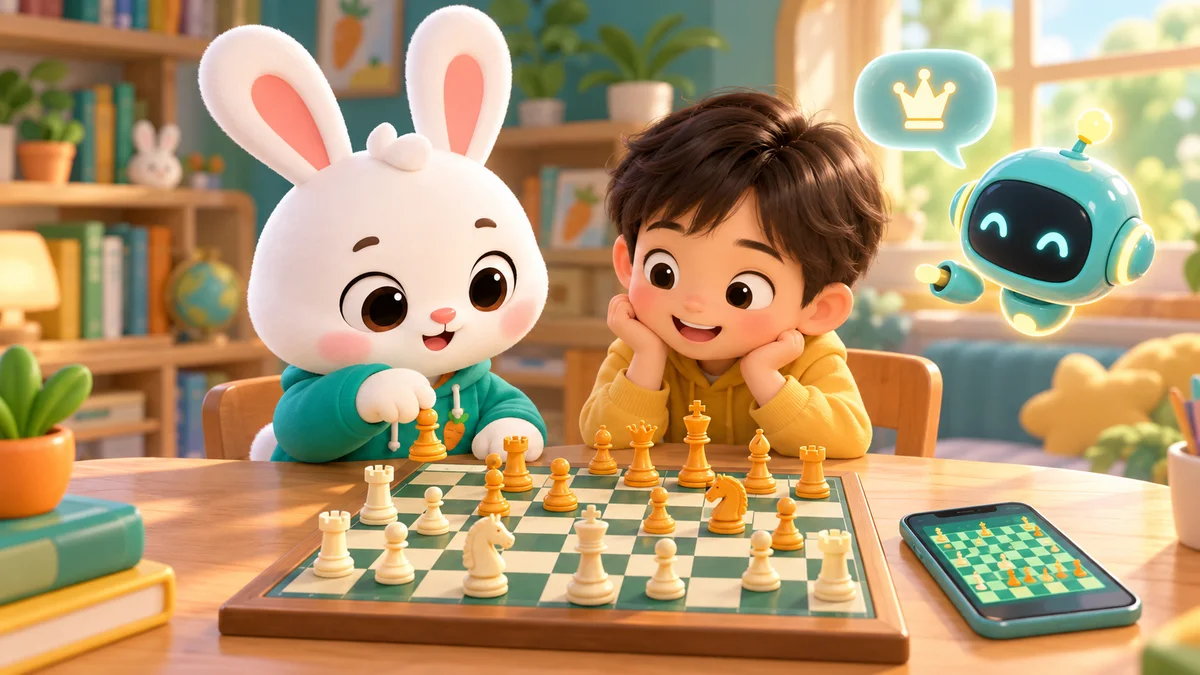
Many parents want to let their children learn chess but don't know where to start: at what age can a child learn, I don't know if playing can be taught, should I buy a chess board or download an app, how long should I study each day? This article collects all of those questions in one place.
Each section below is a short summary with a link to the detailed article. Parents can skim through it to understand the whole picture, then dig deeper into the part they need.
Why should children learn chess?
A game of chess forces children to sit still, look carefully, think before touching and Accept the consequences of your country. These are useful habits everywhere, from word problems to sorting toys. Chess also teaches children to lose without losing their temper, because in every game there are winners and losers.
However, chess is not magic. Some elementary school studies document benefits in concentration and problem solving, but results are inconsistent across studies. The practical view is: chess is a good environment to practice thinking, if children learn happily and regularly. Read more carefully in the article Why should children learn chess?
At what age can children start learning chess?
There is no right number for every child. What's more important than age is whether your child can distinguish left from right, count to 8, and play a game for about 10–15 minutes. The suggested roadmap below helps parents figure out what to teach at each stage:
Details of signs of readiness and how to teach children are in the lesson. At what age should children learn chess?
Chess board, chess pieces and how each piece moves
The chess board has 64 alternating light and dark squares. When placing the table, the right corner box near the player must be the light box (box h1). Each side has 16 pieces: 1 King, 1 Queen, 2 Rook, 2 Bishop, 2 Knight and 8 Pawn. Queen always stands on the same colored square as himself: white Queen on white square d1, black Queen on black square d8.
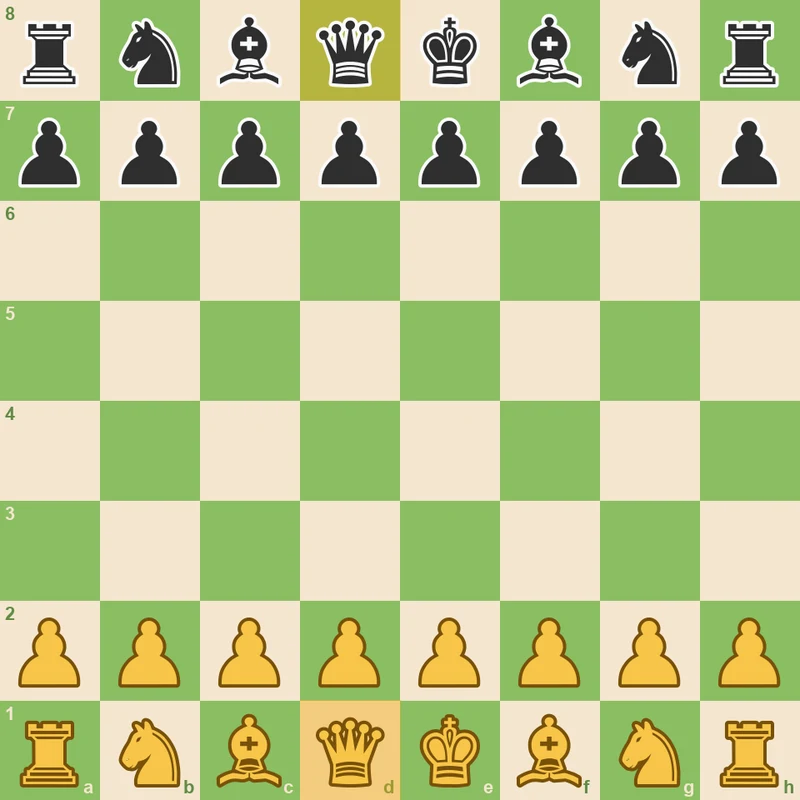
Summary way to go: Rook go straight in rows and columns; Bishop goes diagonally; Queen can go both straight and diagonal; King moves one space in all directions; Knight moves in an L shape and is the only piece that jumps over another piece; Pawn goes straight forward one square (the first move is two squares) but crosses. The lesson Children's Guide to Chess has a diagram of each piece and a mini-game to teach each piece.
Check, checkmate and special rules
When a piece is attacking the opponent's King, it is "projection". The checked side is forced to escape immediately in one of three ways: run King, block the path or capture the check piece. If there is no way to escape, it is "checkmate" and the game is over.
In addition, there are four rules that children often wonder about: castling (King and Rook change places in one move), promotion (Pawn goes to the last row to become Queen, Rook, Bishop or Knight), en passant and stalemate (the side whose turn is not in check but has no legal moves left). Each rule is explained with diagrams in the lesson Mat, checkmate and special rules.
Can children learn chess at home?
Yes, even if parents don't know how to play. The secret is to play in the right order: get familiar with the chess board, learn how to move each piece, learn how to play pieces safely, then come to checkmate and tactics. Children most often give up when they are put into a full game of chess too early, losing continuously without understanding why.
Parents do not need to be good at chess. My role is to keep the study rhythm steady, sit next to me and ask "which side are you going to play and why?" and praise the way your child thinks instead of just praising the results. The specific 6-stage roadmap is in the article Children learn chess at home.
How long should they practice chess each day?
For children 5–8 years old, 15 minutes a day regularly is more useful than a two-hour session on the weekend. A neat 15-minute session can be divided into: 3 minutes reviewing old lessons, 7 minutes studying or solving 2–3 exercises, 5 minutes playing a short game or a small game.
The most suitable exercise for beginners is checkmate in 1 move, taking a safe piece and finding a move Knight to attack two pieces at the same time. Post Practice chess every day has a sample schedule and 3 exercises with answer diagrams for parents to print out or display on a real chess board.
How to choose an app to learn chess for children?
Apps help children self-study when parents are busy, but not all apps are suitable with young children. A few questions to quickly filter:
- Is there a roadmap from easy to difficult, or is it just a place to play boards with a machine?
- Can children who can't read well learn on their own? Can the instructions be read out loud?
- When your child makes a mistake, does the app indicate "wrong" or show why it is wrong?
- Are there any ads, chats with strangers or purchase buttons that are easy to press by mistake?
- How to pay: One-time purchase or recurring subscription?
Comparison table and how to try the app for a week is in the article Chess learning app for children: comparison and how to choose.
Karotto: our chess course for children
Transparency note: Karotto is an app developed by the team behind this website. We introduce it here because the chess course is designed according to the roadmap described in the handbook, but all advice in the above sections can be applied to a real chess board or any other tool.
Karotto is a thinking app for children 5–11 years old with four subjects: Programming, Math, Chess and Cube. The Chess course has 283 lessons divided into 6 Steps, according to the step-by-step method (Step Method) which is used by many chess clubs for children in Europe:
- Step 1: familiarize yourself with the chess board, how the pieces move, protect the pieces, take the piece safely, check and escape check, checkmate, castling, promotion, en passant, stalemate.
- Step 2–3: double attack, pin, checkmate 2 moves, opening, open check, double check, good endgame.
- Step 4–6: lure troops, destroy castles, think 3 moves ahead, open column, seventh row, plan, endgame Rook, and "Pawn karma".
Each lesson has two parts: Learn the model (child looks at the model with arrows pointing the way) then Practice (child walks by touching the pieces, the app now marks the pieces that can be moved). At the end of each Step, there is a Review lesson and a 20-question practice test.
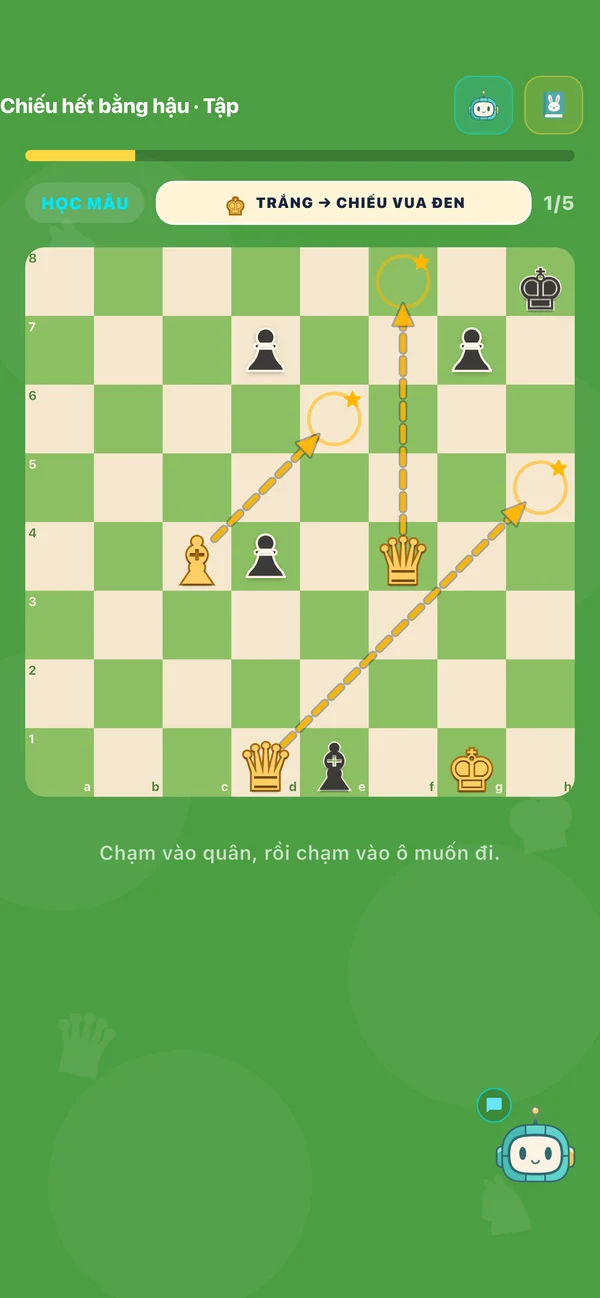
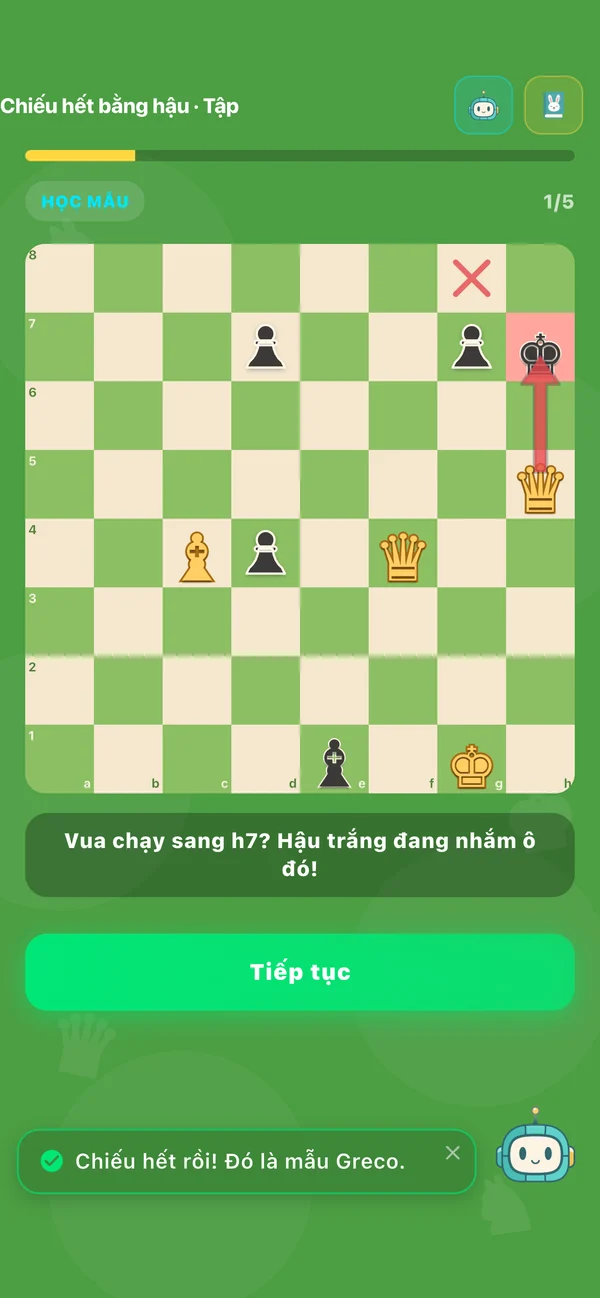
The point we invest the most is feedback. When the child makes a mistake, the chess board shows the consequences, for example "King runs to h7? White Queen is aiming for that square!", so that the child understands why it is wrong, not just receiving the word "wrong". When the child makes a correct move, the chessboard also demonstrates why that move is good with arrows and pieces that light up. If the child is stuck, the robot suggests each step, from mild to clearer suggestions.
All instructions and comments are voice read out loud (13 languages, including Vietnamese), so children who can't read well can still learn on their own. The App has no ads. Every day, children can learn a reasonable amount of lessons for free, all islands are open; When the turn ends, Thỏ Bông will see you tomorrow. The Premium package offers unlimited lessons every day and is a one-time purchase for lifetime useBuy once, use for life, not a subscription, so there are no recurring deductions even for months when the child does not study.
In short
Teaching chess to children without need Parents are good at chess. It takes three things: start when your baby is ready, take small steps in order, and practice a little each day. The rest, the baby will grow up on his own through each game.
Frequently Asked Questions
Can parents who don't know how to play chess teach their children?
Yes. Parents just need to learn how to move a piece first and then teach it to their children, or learn with their children through books, videos or apps with roadmaps. The most important role of parents is to keep a steady learning rhythm and ask their children why they chose that move.
At what age should a child start learning chess?
Many children start learning it systematically from 5–6 years old. Children 3–4 years old can get acquainted through the game of naming and arranging pieces. Signs of readiness are that the child can distinguish left from right, can count to 8 and can sit and play for about 10–15 minutes.
How long should a child learn chess each day?
For children 5–8 years old, about 15 minutes a day is enough: a few minutes reviewing old lessons, a few minutes studying or solving exercises and a short game. Studying regularly every day is more effective than a long session on the weekend.
Which chess piece should you teach your child first?
You should start with Rook because Rook goes straight and is easy to visualize. Then there is Bishop, Queen, King, Knight and finally Pawn, because Pawn has the most unique rules (go straight but cross, the first move can move two spaces, promotion, en passant).
Study Is chess with an app as good as a real chess board?
Each method has its own strengths. The App has a roadmap to help children self-study and receive immediate feedback when they make mistakes; Real chess boards help children play with relatives and hold chess pieces. A good way is to combine: learn lessons on the app, then occasionally play a game on a real chess board with your parents.
Learn chess with Thỏ Bông
283 lessons from getting used to the chess board to the end game, with a Vietnamese voice and the chess board demonstrating why it's right and why it's wrong. Learn a reasonable amount of lessons every day for free.
Download on App Store → Download on Google Play →